Showing posts with label Thames Second Look in colour. Show all posts

Thursday, October 15, 2020

Thames (NZ): Take a second look in Colour - Moanataiari Creek

The Moanataiari Creek Valley
The view for today is of the Moanataiari Valley. Personally special as it was home to my Great Great Grandparents Clement and Barbara Cornes and their family. In total they had thirteen children - three passed away early and are interred at Shortland Cemetery, Thames.
     Clement Augustus Cornes was at various times a miner, mine manager and mine owner. Around 1868, Cornes was working the Just-in-Time Claim, Moanataiari Creek. By the 1875 Electoral Roll, Clement and his brother Alfred (and their families) resided at the Golden Calf Claim, which was to the south of the previously mentioned claim.
1875 Thames Electoral Roll 
Source: Ancestry.au., Thames Library Edition

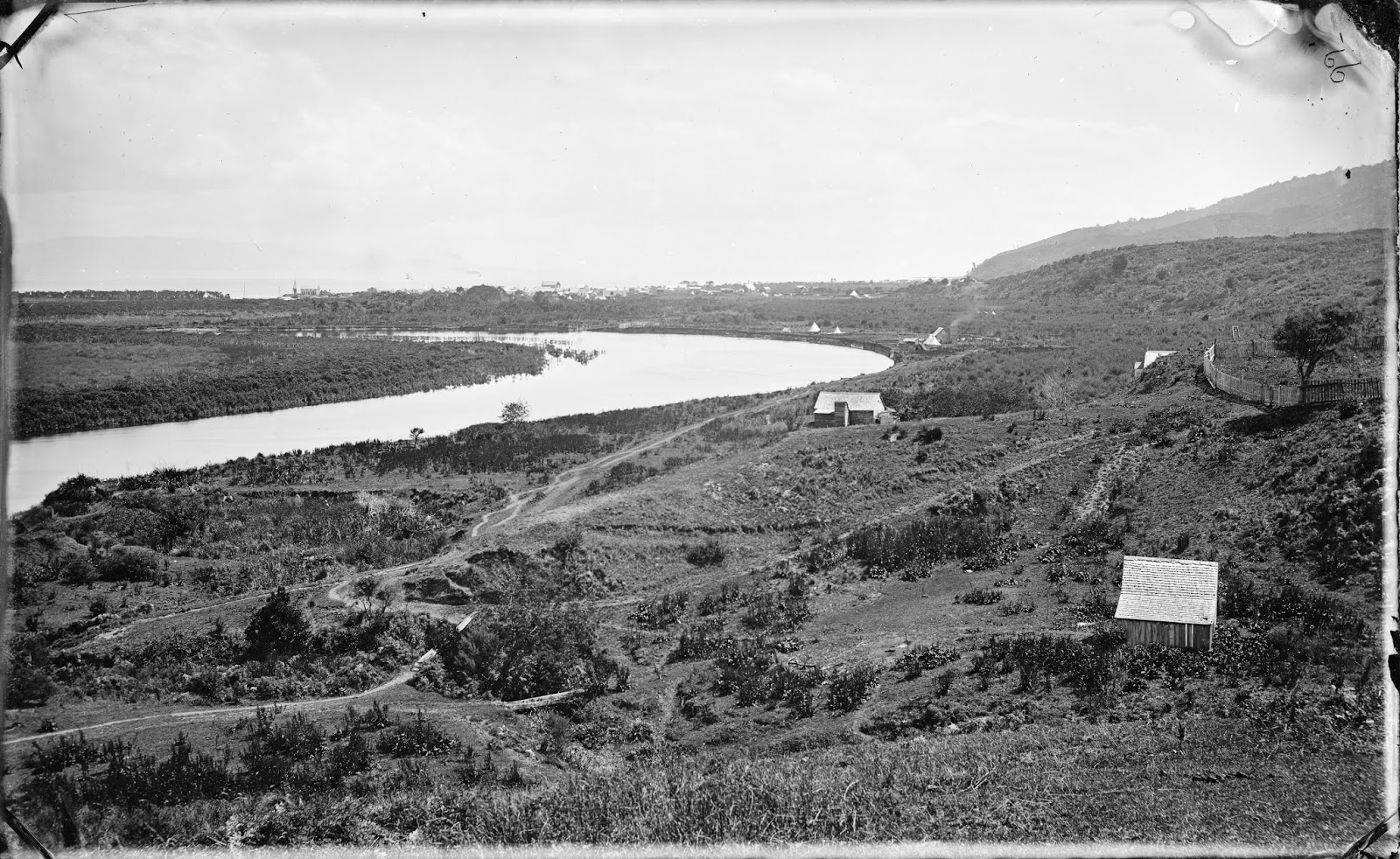
Moanataiari Creek, Thames (c1869)
Source:  'Sir George Grey Special Collections, Auckland Libraries, 7-A16668' 
PHOTO Description
Looking along Moanataiari Creek, Thames, showing gold mining activity. The rail line going off to the left is going up to the Victoria Battery. This is the original rail line that Tookey put in from the beach to the battery and sold to the government when they began building the extension proper of the Moanataiari Tramway up the upper part of the valley to Punga Flat in 1869. One of the buildings in the distance is the (Grand) Junction Hotel. The track going up the valley to the left is to Eureka Hill.

A Second Look in Colour

 What Do You See?

  • People walking along the tramline heading to Grahamstown or beyond. Perhaps going over the hills to Eureka or Waiotahi Creek School.
  • Devastation! The landscape dominated by mining, adits, tree stumps and wooden buildings perched on the valley wall.
  • A lone tree, but a memory of how the land was before the hunt for gold took over.
  • Piles of cut timber far left - is someone building a new hut, or for use in a nearby mine?
Above: The children and women are immaculately dressed, while the men take a break. 
Below: A miner is seated on the right, beside a small hut.

Principal Buildings at the Moanataiari Creek Settlement
     Previously I confess I hadn't taken a great deal of notice of the buildings at the far right of the original photo. I was surprised to see the description which stated that one of the buildings was the (Grand) Junction Hotel. In the past I wrongly assumed the buildings were soley mining related. Look at the photograph snips below and follow the tramway up to the buildings. Not a place for the less fit!
     The steam driven Victoria Battery is nestled at the base of the hill, the battery's large chimney visible above the roofs.
     In the Thames Directory 1870, three businesses operated up the Moanataiari Creek: A general store (Mr T E Bush), Grand Junction Store (Mr R B Mason), and the Junction Hotel (Mr R S Browne).

  
 Above & Below: Various snips of the full colourised photo labelled 'Moanataiari Creek'.

The Grand Junction Hotel & Store - Which is Which?
      The dilemma is which building is the Grand Junction Hotel? My money is on the 'larger' building, as accommodation would have been a core part of the hotel's business. We do know that a store was located directly adjacent to the hotel (more on that later) and that both were by the Victoria Battery.
    In the colourised view it appears there is a lamp outside the larger building, a requirement for hotels of this era. Does the writing say hotel or Store? (see enlargement below)


The Grand Junction Hotel
     Hotels on the goldfield often took their name in relation to the nearest mine, so we would assume that the Grand Junction Hotel was named after the nearby Grand Junction Claim.
     The hotel opened c1868 and closed 1880. Known Publicans were: Matthew Vaughan (1868-69); R S Browne (1870); Sarah Jane Vaughan (1871); Louis Segar (1871-72); Elizabeth Isaacs (1872); George Burdett (1874-75); William Hetherington (1875-76); Samuel Barrett (1876): and Michael Driscoll (1878-80).
    Maori War veteran Mr Matthew Vaughan, built and operated the hotel . He married his barmaid in 1869, who subsequently left him for another man. Around 1869, Vaughan moved onto other hotels at the Thames while a string of new publicans graced this hotel up the Moanataiari Creek.
     The Grand Junction Hotel was used as a meeting place by the residents of the Moanataiari Creek. In 1871 for instance they gathered there to discuss the matter of town boundaries.

THAMES GUARDIAN AND MINING RECORD, 19 AUGUST 1872

     Early in the morning 23 March 1874, there was a fire which burnt the Grand Junction Hotel and Bennett’s adjoining store to the ground. The fire reportedly started by a spark from one of the engine furnaces in the area.  Its not clear when the new hotel was built, but Publican George Burdett was in residence by 7 February 1875, when the sad news was published that his one year old son George had died at the Grand Junction Hotel.
DAILY SOUTHERN CROSS,  24 MARCH 1874
     
     For many years the owner of the hotel was Ehrenfried Bros, who owned the majority of the hotels in the town. It was therefore the norm that hotels leased. Each hotel had a publican who was required to gain a license from the local licensing board.
     Another common use for a hotel on the goldfield was to act as a 'morgue' for the recently deceased. The person's body held at the hotel until the police arrived and / or an inquest was held. This was the case in October 1878, when there was a fatal accident at the Moanataiari Mine. Tributer Thomas Pugh was crushed to death by several tonnes of earth - his body was taken to the Grand Junction Hotel until the police arrived. The late Mr Pugh was then conveyed to his residence in Pollen Street awaiting an inquest and interment. Thames Advertiser 4 October 1878.
    In January 1880, there was another fire at the hotel leased at that time by Michael Driscoll. That appears to be the end of the Grand Junction Hotel!

Grand Junction Store
     The store was owned by Mr Richard B Mason (c1870), and then operated by Mr T A Bennett (c1872-1880). There were two major fires at the store (outlined above) in 1874 and 1880. There are no details found (as yet) for the store trading after the last devastating event.
THAMES GUARDIAN AND MINING RECORD,  26 JANUARY 1872

Comparative Photographs
     There is another photograph of the Victoria Battery and the view up the Moanataiari Gully which compares the landscape changes. Then there is another one of the 'same' view.  Both are below, notice anything?
Photo 1 (Left): Showing the Moanatairi Gully near Dauntless Mine, Thames  Sir George Grey Special Collections, Auckland Libraries, 3681-45
Photo 2 (Right): "Showing the Victoria Battery at the Moanataiari Creek , Thames near the Dauntless Goldmine" Auckland Libraries Heritage Collections 4-3678

Did you spot the difference? A flipped image...the correct one on the right? This matches the landscape landmarks in our photo of the day at the beginning of the article. [Auckland library have been notified regarding the images]

Take the Challenge:
     Do you know the names of any of the mines / claims in the Moanataiari Valley area.
Check out The Thames Illustrated Mining Map (part below) for some clues.
    Did you say: Auckland Consolidated, Belfast, Caledonia, Duke of Edinburgh, Galatea, Golden Calf, Grand Junction, Hazel Bank, Just in Time, Kellys, Morning Star, Otago, Pai Marire, Redan, Tookeys, or Young American? And many more!

Thames Illustrated Mining Map
Source: Auckland Libraries Heritage Collections NZ Map 4531

Below: Crop of the above map.
1. Victoria Battery; 2. Just In Time Claim; 3. Golden Calf Claim

Suggested Reading:
Goldrush to the Thames New Zealand 1867 to 1869, by Dr Kae Lewis. Parawai Press 2017.

SIDE-BY-SIDE - Colourised & Original
Moanataiari Creek, Thames (c1869)
Source:  'Sir George Grey Special Collections, Auckland Libraries, 7-A16668' 

Friday, September 18, 2020

Thames (NZ): Take a Second Look in Colour at Grey Street

 Without doubt, this view east along Grey Street, Shortland Town on the Thames Goldfield is a classic! The photo gives us a glimpse of life on the goldfield. What do you see? Here are a few things...

  • A woman dressed in a full skirt, cape and hat.
  • The roads are clearly marked, the surface rough with some stone base.
  • The Hape Creek crosses the intersect of Grey and Mackay Streets (centre of photo).
  • Deep drains line the sides of the street.
  • The Karaka / Una Hill is bare of vegetation, and pitted with adits and tracks.
  • Grey Street extends up the hill to Mount Pleasant (present day Jacob's Ladder).
  • The building on the left is the first Shortland Post Office.
  • There is a goat at the door of the Post Office, there were a lot of goats on the Thames Goldfield!!!
c1868 Grey Street (above) and present day below

Source: Grey Street, Shortland, showing first Post Office. Ref: 1/2-096130-G. 


A Second Look in Colour
Remember that the colour is not exact; but step back in time and take another look at Grey Street as 'our' Thamesites knew it.


On a closer look, the road between the Mackay and Bowen (aka Rolleston) Streets is busy with people. Maybe these men are clearing the road of rocks? Fixing pot holes? Digging drains or just walking back to their homes. Just imagine crossing Hape Creek after rain? There were predominantly only foot bridges going over the creek - as shown in the photo above. Pay attention to the details on the woman's dress - the hard life on the goldfield wasn't going to defeat these pioneers. Standards were maintained, a visit to the main business district required 'Sunday Best' clothing. 

Take the Challenge
Look at your favourite photographs of The Thames. What stories can you conjure up about the people on the streets.  
Let's see...maybe this is my Great-Great Grandmother who has been to the Post Office to send a letter to her grandmother back in Scotland or mother-in-law in Ireland. Perhaps her mother is coming for a visit from Auckland, the ship is due to pull in at the Shortland Landing on the next high tide. Or maybe she waits expectantly to see if her husband Clement will find some gold to put food on the table!   Oh no! Clement has been spotted - he is at the Court House speaking to James Mackay, (taking out yet another Miner's Right).  This time Clement is positive that he has found the next greatest claim!  The rest is History!

Thursday, June 11, 2020

Thames (NZ): Dalmatian Family History Resources

1. Have you explored the information in Kura Heritage Collections Online recently?

Several documents relate to settlers from Yugoslavia who came to the Thames area, in particular to the Kauaeranga Valley. The men worked in the bush and looked for gum; with some becoming well known farmers in the valley. Below are some links for information on these families:
  • Kauaeranga Valley & Devcich Brothers is available to view online and download. The importance of the kauri logging is covered, along with invoices and paybook details for Dalmatian settlers such as the Devcich's. Mr Simun Devcich "came to New Zealand from Yugoslavia in 1902 and at the age of 17 years commenced work on the gumfields of the Coromandel Peninsula." Page 27.

There are 88 items from the Dalmatian Genealogical & Historical Society, from which you are sure to find a lot more information on families who lived (even for a short period) in the Thames - Kauaeranga Valley area.

2. Another source for names of settlers from Yugoslavia / Dalmatia is the 1917 Aliens Register. 
Notice of the Registration of Aliens Act (below), where "every alien is required to make application for registration in the prescribed form not later than 1st December, 1917. Alien means a person of either sex not less than fifteen years of ages who is not a British subject either by birth of by naturalization in New Zealand." Auckland War Memorial Museum.

Thames Area Names in 1917 Aliens Register
Source: New Zealand Register of Aliens 1917 : in 2 volumes, pages 120-124
Government Printing Office Publishing, Wellington, New Zealand Pub. Year: 1917


Surname, Firstname: Birthplace, Occupation, Address
Aab, Jacob: Russia, Cook, Kauaeranga Valley
Ah Lom, : China, Market Gardener, Parawai
Angjelinovic, Simun: Dalmatia, Gum digger, Tairua
Barkarich, Kuzina: Dalmatia, Gum digger, Gumtown
Barbalid, Josephine: Austria, Domestic Duties, Kauaeranga Valley
Barbalid, Tudor Nikola: Austria, Farmer, Kauaeranga Valley
Barbarich, Roko: Dalmatia, Gum digger, Hikuai
Barbarich, Thomas: Dalmatia, Farm labourer, Turua
Barbarich, Tony: Dalmatia, Drainer, Turua
Bartularich, Tane: Dalmatia, Gum digger, Tairua
Bartulovich, George: Dalmatia, Gum digger, Hikuai
Bartulovich, Jozepk: Dalmatia, Gum digger, Hikuai
Bartulovich, Toni: Dalmatia, Gum digger, Tairua
Basmalinavich, Albert: Dalmatia, Drainer, Turua
Bilcich, Toma: Dalmatia, Gum digger, Hikuai
Bitech, Petar: Dalmatia, Gum digger, Puriri
Blank, Albert: Germany, Fisherman, Mackay St, Thames
Blumenthal, Kurt George: Germany, Farm labourer, Pipiroa
Boehmert, Alfred: Germany, Gum digger, Gumtown
Bonefacid, Nikola: Austria, Farmer, Kauaeranga Valley
Boravich, Thomas: Dalmatia, Drainer, Turua
Botica, Mijo: Dalmatia, Gum digger, Hikuai
Botica, Visko: Dalmatia, Gum digger, Hikuai
Bratlie, Ingvaed Johan Hanson: Norway, Farmer, Ngatea
Burich, Miho: Dalmatia, Farmer, Hikutaia
Ching, Wong: China, Market Gardener, Totara, Kopu
Claxton, Sarah Ann: United States, Domestic Duties, Parawai
Curin, John M: Dalmatia, Farmer, Kauaeranga Valley
Dazench, Ivan: Dalmatia, Sawyer, Gumtown
Devcich, Antonio: Austria, Domestic Duties, Puriri
Devcich, Grgo: Dalmatia, Dairy-farm hand, Kauaeranga Valley
Devcich, Matya: Dalmatia, Domestic Duties, Puriri
Devcich, Simun: Dalmatia, Farmer and Storekeeper, Puriri
Divich, Mate: Dalmatia, Gum digger, Hikuai
Edwardson, Anthony: Norway, Fisherman, Whangamata
Erceg, Anton: Dalmatia, Storekeeper, Gumtown
Erceg, Jozip: Dalmatia, Storekeeper, Gumtown
Erceg, Nicholas: Dalmatia, Labourer, Kauaeranga Valley
Exelsona, Olaf: Sweden, Old age pensioner, Tairua
Fagerstrom, Ernis Gabrial: Denmark, Farm assistant, Waitakaruru
Fisher, William: Holland, , Tararu Creek, Thames
Fog, Ah: China, Market Gardener, Warahoe
Foo, Ah: China, Market Gardener, Warahoe
Frantovich, Johan: Dalmatia, Farm labourer, Waitakaruri
Garmay, Fred: Dalmatia, Drainer, Turua
Garmay, Tony: Dalmatia, Drainer, Turua
Gin, Lee: China, Market Gardener, Warahoe
Gisler, Francis R: Switzerland, Dairy farmer, Turua
Godfrey, Olufine: Norway, Domestic Duties, Franklin St, Thames
Granville, John: Denmark, Fruitgrower, Kauaeranga Valley
Gundlock, Agnes Magdlene: Norway, Farm assistant, Puru, Waiomio
Gundlock, Johannes: Norway, Farm assistant, Puru, Waiomio
Hangard, Einar Thorvald Hofgard: Denmark, Butter factory assistant, Kopu
Hansen, John Emut: Denmark, Orchardist, Parawai
Hansen, Louise Elizabeth: Germany, Domestic Duties, Parawai
Hollstun, John August: Finland, Farm worker, Turua
Huljish, Andrew: Dalmatia, Gum digger, Hikuai
Huljish, Steave: Dalmatia, Gum digger, Hikuai
Janovich, Jack: Dalmatia, Gum digger, Puketui
Johns, Joseph Peter: France, , Tairua
Johnson, Charles: Denmark, Gardener, Sandes St, Thames
Jonquin, Paul: South America, , Puriri
Jordan, Rudolph: Switzerland, Chauffeur & Gardener, Thames
Juricevich, Ivan: Dalmatia, Gum digger, Gumtown
Juricevich, Nikola: Dalmatia, Gum digger, Gumtown
Kavich, Ivan: Dalmatia, Gum digger, Hikuai
Kavich, Jaze: Dalmatia, Gum digger, Hikuai
Knap, John: Germany, Dairy farmer, Pipiroa
Kon, Ah: China, Market Gardener, Warahoe
Koslich, Savo: Dalmatia, Gum digger, Tairua
Kriskoivich, Balri: Kosia, Gum digger, Hikuai
Kriskoivich, Mate: Kosia, Gum digger, Hikuai
Kristovich, Toni: Croatia, Gum digger, Hikuai
Lee, Thomas: Norway, Gold miner, Tapu Creek, Tapu
Long, Ah: China, Market Gardener, Warahoe
Lopes, Ermine Jildo: Cape Verde Island, Labourer, Tairua
Lovrich, Mateo: Austria, Farm assistant, Kauaeranga Valley
Marelich, Toni: Dalmatia, Farm labourer, Puketui
Martin, Robert: Russia, House builder, Turua
Matijasevich, Andria: Dalmatia, Gum digger, Hikuai
Matijasevich, Ivan: Dalmatia, Gum digger, Hikuai
Matyoswich, Peter: Dalmatia, Gum digger, Hikuai
Meyenberg, Sophia Margaretta Anne: Germany, , Tairua
Mialjevic, Jose: Dalmatia, Gum digger, Hikuai
Mijaljevic, Stipe: Dalmatia, Gum digger, Tairua
Mog, Wong: China, Market Gardener, Totara, Kopu
Mood, George Henly: Germany, Old age pensioner, Matatoki
Nicholson, Alex: Sweden, Gum digger, Gumtown
Nielsen, Hans Valdemar: Denmark, Buttermaker, Kopu
Olsen, Fredrick: Sweden, Dairy farmer, Turua
Ostarich, Toni: Dalmatia, Gum digger, Hikuai
Pearson, Peter: Denmark, Dredge Engineer, Sealey St, Thames
Penseler, William: Germany, Fruit farmer, Thames Coast
Penzholz, Auguste: Germany, Domestic Duties, Pipiroa
Piacun, Dinko: Dalmatia, Gum digger, Gumtown
Piacun, Mate: Dalmatia, Farm labourer, Turua
Piacun, Tome: Dalmatia, Gum digger, Gumtown
Pinchs, Martin: Switzerland, Dairy farm Hand, Turua
Pizarun, Mirk: Dalmatia, Gum digger, Gumtown
Pizarun, Toni: Dalmatia, Gum digger, Gumtown
Printise, Nicholas: Chile, Gum digger, Tairua
Radich, Jack: Dalmatia, Gum digger, Puketui
Radovancich, Bartol: Dalmatia, Sawyer, Gumtown
Radovanich, Ivan: Dalmatia, Gum digger, Hikuai
Radovanovich, Antony: Dalmatia, Gum digger, Rangiou
Radovanovich, Frank: Dalmatia, Gum digger, Gumtown
Rolansen, Axel: Norway, Gold miner, Puketui
Ross, Charles: Sweden, Bushman, Hikuai
Ross, John: America, Old age pensioner, Omotui
Rouse, John: Sweden, Bushman, Whangamata
Ruzich, A J K: Austria, Gold miner, Waiomio
Sahor, Tony: Dalmatia, Gum digger, Utamahitai
Sale, Marin: Dalmatia, Labourer, Kauaeranga Valley
Sardelich, Frank: Austria, Farm labourer, Wharepoa
Schmidt, Joseph: Denmark, Farmer, Matatoki
Schwarz, Hermann : Germany, Dairy farmer, Pipiroa
Slavich, Steve: Dalmatia, Gum digger, Hikuai
Slavich, Toni: Dalmatia, Gum digger, Hikuai
Sokolich, Andria: Croatia, Gum digger, Hikuai
Sokolich, Ivan: Croatia, Labourer, Kauaeranga Valley
Sokolich, Ivan: Croatia, Gum digger, Hikuai
Sokolich, Philip: Croatia, Gum digger, Hikuai
Solari, John: Italy, Pensioner, Hikuai
Song, George J: New Caledonia, Bushman, Te Mata, Tapu
Sorensen, Simes Anton: Norway, , Turua
Stewart, Annie: Sweden, Domestic Duties, Turua
Sukovich, August: Croatia, Gum digger, Hikuai
Swanson, Alexander: Sweden, Bridge worker, Ngatea
Sylvia, Antonio: Portugal, , Puketui
Tvankovich, George: Dalmatia, Gum digger, Gumtown
Vicira, Manual: Portugal, Stamperman, Nevesville
Vinjovich, Mick: Dalmatia, Gum digger, Hikuai
Vitali, Domenick: Dalmatia, Store Assistant, Gumtown
Vitali, Michael D: Dalmatia, Storekeeper, Gumtown
Vujnovic, Toni: Dalmatia, Gum digger, Hikuai
Zimmerman, August: Germany, Farm labourer, Pipiroa

NB. Spelling variants in translation and transcription efforts. List includes many nationalities.

1908. Kauaeranga Valley, during the logging years, and where many Dalmatian families settled.
Colourised version courtesy of MyHeritage.com
Original Source: Auckland Libraries Heritage Collections AWNS-19080611-5-1

Saturday, June 6, 2020

Thames (NZ): Thames Second Look in Colour - Pārāwai.

Another favourite view is a D M Beere photograph looking over Pārāwai towards Shortland Town.
     Taken around 1868, the foreground focuses on the area around the Hauraki Mission Station that was located in the Mount Sea Road - Herewaka area of Pārāwai.

Photo Right: View from Hauraki Mission Station at Parawai, towards Shortland. Ref: 1/2-096132-G. Alexander Turnbull Library,  Wellington, New Zealand. /records/23172220

Imagine living in this area around 1867, alongside tangata whenua and missionaries. Nestled by the meandering Kauaeranga River, the inhabitants were witness to the development and chaos surrounding Shortland Town and Grahamstown.

A Second Look in Colour
What did you see in the photograph above? A few houses, bush tracks and buildings in the distance?

  • Take a 'second look' and spy the Duke of Edinburgh Hotel adjacent to the Shortland Landing - present day this is the area of the Shortland Wharf at the seaward end of Grey Street, Thames. The hotel is the two storied building right of centre in the snip below. There is also a large boat anchored at the landing, with several other masts to the left of centre.


  • Moving right in the original D M Beere photograph to the bend in the Kauaeranga River - present day this is the area of Banks Street and Parawai Road. There is a small settlement, with a boat anchored alongside the bank. Abode construction ranges from punga huts, to tents, to small wooden huts, to a large house with an outside chimney billowing smoke. Maybe the residents had been boiling water for wash day, as their long clothes line is loaded with washing!


  • The next snip is of a well established area at Pārāwai - the Hauraki Mission Station (HMS) grounds and Church. A well fenced area, with the mission house out of view to the right. The church bell is clearly visible top centre, and on the flat below is the first HMS Church built 1863. The HMS had been established at Puriri in 1833 and moved to Pārāwai in 1837.  Present day this is the area around Mount Sea Road and Herewaka Street.

  • Given the previous blog post dealt with early footpaths at nearby Shortland and Grahamstown, it would be remiss not to look at walkways and tracks along the Kauaeranga River area. The 'second look' in colour shows the tracks leading from further up the Kauaeranga River back to Pārāwai. The paths look in relatively good condition, although narrow, adequate for foot and horse traffic. Gully areas have what looks like logs, forming footbridges.


Wow, what a difference colour makes! Remembering the warning from our previous colourised post, the colour has been automatically generated and has not been refined to correct possible errors. Regardless, its still worth a 'second look'.

Then & Now 1868 & 2019
Photo sources:
Top: Photo Right: View from Hauraki Mission Station at Parawai, towards Shortland. Ref: 1/2-096132-G. Alexander Turnbull Library,  Wellington, New Zealand. /records/23172220 Colourised courtesy of MyHeritage.
Lower: Aerial view from Google Maps.

Background Reading:
Hauraki Mission Station (Puriri and Parawai Sites), by David Wilton, Treasury Journal 2008.

Friday, June 5, 2020

Thames (NZ): Asphalt arrives at the Thames Goldfield

Excitement at The Thames 12 October 1877, the first asphalt footpath was completed! Whats the big deal you may ask, and was it really the first? (Note variant spelling in the newspapers as 'asphalte')

THAMES ADVERTISER, 22 OCTOBER 1877

The first footpaths at Shortland Town and Grahamstown
   Mathias Whitehead came to Shortland Town in 1868 and described the state of the roads and footpaths at the time of the 1917 reunion. Whitehead recalled the town as the "City" of Board of Works [sic], "when a substantial wooden footpath was laid down" because most walkways were impassable in the early years on the goldfield.

 
 Left: Whitehead's report on the state of the footpaths. Thames Star 1 August 1917.  Right: 'Boardwalks' surrounded shops at the Thames Museum during 'Heritage Rescue' filming 2015. These have since been removed.

Above: This is the area of Shortland Town that Mathias Whitehead was talking about. Spot the wooden boxing used to separate road from footpath and to act as a drain. In some cases this was enough to keep the footpath in good condition, as the shop owners could afford it, a wooden board walk was added.

      Any alterations to the footpaths had to be approved by the local Highway Board. In April 1872, Mr Ehrenfried applied to the Waiotahi District Highway Board to build a wooden footpath in front of the Grahamstown Hotel.
      While initially a success, within a few years the wooden footpaths began to deteriorate. The cause varied from children deliberately vandalising the footpaths to mobs of cattle being driven through the town straying on them. One of the most significant was water damage from floods and high tides. Hence they soon became unsafe and a danger to pedestrians.

The Asphalt solution!
     There are reports in the newspapers around New Zealand in the 1860s about footpath construction and various methods of compressing rock, to the use of tar or asphalt.
     There are no mentions of 'asphalt' in the Thames Guardian newspaper 1871-1872.
From 1874 the Thames Star (Evening Star) and Thames Advertiser are online at Paperspast, below is a summary of the development and use of asphalt footpaths:
  •  1874 24 Sept Thames Advertiser: The Union Bank of Australia (corner Queen & Albert Streets) were building a new brick premises and planned to have an asphalt footpath.
  • 1876 13 March Thames Star: The Borough asphalters were busy outside the Academy of Music and Pacific Hotel in Brown Street.
Thames Star 13 March 1876.
  • 1877 12 October Thames Advertiser: The report stated the first asphalte footpath at the Thames was completed in front of the Bank of New Zealand in Brown Street.
  • 1877 26 June Thames Star: The Thames Borough Council suggested that the repairs to the footpath outside the Theatre Royal Hotel in Williamson Street, be constructed in asphalt.
  • 1878 16 January Thames Star: It was not just footpaths that were being made in asphalt, the floor of the new fire engine shed at Shortland was being laid with this product.
  • 1878 28 January Thames Star:  News that the Queens Hotel (corner of Albert & Queen Streets), and the Pacific Hotel (corner Brown & Albert Street) were both planning to put down asphalt footpaths outside their premises. In one month March-April 258 yards of asphalt were laid outside the hotel.
  • 1878 6 April Thames Star: It was noted by a writer named 'Perambulator' that it was pleasing to see townsfolk showing faith in the town by making upgrades such as laying on water and gas, plus laying down asphalt footpaths.
  • 1878 9 April Thames Star: The new footpaths were taking a bit of getting used to, painters were warned about the use of ladders in the newly laid asphalt paths as they were prone to leaving holes especially on hot days. 
  • 1878 19 April Thames Star: All the asphalt work around the town, meant that the Council was busy trying to procure further supplies of stone or gravel - Tenders were called for 200 cubic yards.
  • 1878 31 May Thames Advertiser: Problems were encountered with the new method of laying footpaths, the join between old and new was prone to causing problems. "An instance occurred last night. The respected incumbent of St George's was escorting one of the members of his choir home, when opposite the Queen's Hotel he was forced to his knees, and compelled to maintain a recumbent attitude for a few seconds, through the unevenness of the new path where it joins old."
What were the costs of the footpaths?
    As at March 1878 the average cost of footpaths per running foot was: Asphalt 3s 4d; common filling with water tables 2s 4d; common filling without water tables 1s 6d. A report to the local Council recommended that water tables and a footpath be completed the length of Pollen Street from Shortland to Grahamstown.  The cost 937 Pounds 8 shillings. For a 3 foot wide asphalt path laid along side the tables the total cost would be 1406 Pounds 16 shillings.
     As the months passed, more side streets were planned to have footpath upgrades. The costs were often under debate, Mr Soury for instance claimed 12 October 1878, that he could lay the new asphalt footpaths at a greatly reduced rate.
     The local cricket club saved some money by getting a loan of the asphalt roller to roll the cricket green for the new season. (Thames Star 27 August 1880)
     Ongoing costs ensued over the following years. Topdressing of the original footpath was needed as part of the maintenance routine, plus repairs to sections of the path due usually to sinking and subsidence.

Initially it was exciting to get a date for the first asphalt footpath at the Thames - 12 October 1877. However there appears to have been without question several sections of footpath laid during 1874 to 1876, along with the use of asphalt for floors in some premises. In the following decades, asphalt tennis courts make the headlines on numerous occasions! Regardless, the use of the asphalt process / material was a great improvement over the initial paths tread by the first settlers on the Thames Goldfield.

Above: Boardwalk sections can be seen top right outside the St George's Hall at the northern end of Pollen Street, along with boardwalk crossings to several hotels and businesses on the eastern side of the street.

Above: early 1900s view of Bank of New Zealand (centre right), the reported area where the first asphalt footpath was laid in 1877.
Below: Then & Now. The Pacific (left out of view) & Wharf Hotel on the left c1880, corner Albert and Brown Streets. The area where asphalt was reported to be laid in 1876. 
 

Monday, May 18, 2020

Thames (NZ): UPDATE Grahamstown a Second Look in Colour

Part of the original photograph - Grahamstown
Yesterday we looked at Grahamstown, focusing on a colourised version of a Daniel Mundy photograph taken c1871. The question was raised about the large pond like structure.

"Fascinating to see the detail of the "pond" in the photograph. Initially in the original format I thought it was tailings or waste from one of the industrial sites in the area. The colourised view however shows incredible details of a sandbag type construction, was it therefore more likely a water reserve for public or business use?"

Discussion:
Thanks to feedback from David and Russell we can look again at the 'pond' thanks to their knowledge and understanding of mining history.


Point 1: When looking at these colourised images, we should be weary of the colours portrayed and how we may consequently influence what 'we see'. The change process is automatic so wrong colours may be assigned to an area. Is the 'pond' area actually a pond containing water or bare land. Given the sandbag like construction, the possible reflections, shape of the structure with banks it would appear a reservoir of some nature is correct.

MyHeritage has details on how the colourisation process works, plus they have added a new facility that allows the researcher to modify / correct colour mistakes.

Point 2. A reliable water supply was vital, and without it batteries were unable to operate. During summer therefore, many batteries were unable to work, thus leading to the urgent need for a reliable water source for the town and businesses. (The water race opened in 1876) The Prince Alfred Battery is an example of a battery having a salt water reservoir.

"Steam was the major power source for the operation of batteries on the flat. In lieu of sufficient running water, wood resources (for fuel) were exploited very quickly.  As the battery numbers increased, coal soon became the main fuel (imported from the Northland coalfields)...The batteries that had water wheels tended to be further up in the valleys where the water supply, while less, was more easily able to be tapped into as batteries were generally very close to the streams." Skeet, R

Point 3. Using salt water to power machinery was not without its challenges and accidents! As was the case in the Kuranui boiler accident in 1874.

In the Daily Southern Cross 18 December 1868, there was a comprehensive report on the Kuranui Battery, which also gave details on the use of water reservoirs on the Thames Goldfield - in this instance sited on the beach. Part of the report follows: "A large reservoir has been cut in the rock on the beach, which serves to store about sixty thousand gallons of water, to supply the machine when the tide is out." 

Daily Southern Cross 18 December 1868,
Reservoirs
There are numerous reports in the newspapers on the construction of reservoirs related to mining activities. For instance, the Thames Crushing Company's reservoir was completed March 1869 and the Kuranui Company's reservoir was enlarged and lined with timber in June 1869.

In the Daily Southern Cross 23 October 1869, the importance of  quality water was discussed in relation to the new reservoir built for the Prince Alfred Battery on the flat at Grahamstown. The new reservoir under excavation was planned to be a hundred feet square and eighteen feet deep.


The use of water was regulated and applications for use were necessary. While this is off topic, there are full details in the newspapers of the day along with parliamentary papers and acts.
A great example is published in the Daily Southern Cross 6 March 1868. The subsection for Water Rights outlines rules and regulations.

Closing: 
Following review and discussion we have been reminded of certain key points.
  • Water was vital on the goldfield for mining activities, while getting rid of underground water often hindered mining operations.
  • Salt Water was better than nothing, but its use posed problems to the integrity of the machinery.
  • Lastly, while enjoying the colourised photographs, be open to the fact that colour selection and display is not necessarily correct without further fine tuning and modification.

Sources:
Skeet, R and Wilton, D - Email communications 18 May 2020.
Wilton, D: THE THAMES WATER RACE (1876 - 1947) Treasury Journal.

Sunday, May 17, 2020

Thames (NZ): Grahamstown a second look in colour

Industrial Grahamstown & beyond:

Grahamstown
Te Papa Tongarewa
Do you have a favourite view of the Grahamstown and Moanataiari area during the goldrush? It may depend on whether you are looking for examples of housing, trying to identify shops or mining activities or some other landmark?

One of the best examples is this image taken by Daniel Mundy c1871 from the vicinity of the Eureka / Shotover Road, south of  present day Kuranui Bay. (photo right)

You can almost smell the smoke and hear the noise of the mining operations dotted along the narrow section of land between hill and sea - unrecognisable today following decades of reclamation.

Grahamstown through colourised lens:

Would colour make a difference to your perception of the view?

Thanks to Tom B for labelling some of the landmarks. To help get your bearings, the Moanataiari Battery (in the centre) would present day be located on the intersection of Ferguson Drive, SH 25 and Dickson Street.

Colourised View of Grahamstown courtesy of MyHeritage.

From left to right (east to west) the following landmarks are marked: Golden Crown Mine (behind Tookey's Shaft), Tookey's Mine, Caledonian Battery, Souters Battery, Kuranui Battery, United Pumping Association / Big Pump, Smale's Folley, Moanataiari Battery, Holdship's Wharf, Grahamstown Tramway and the Kuranui Hotel.


Fascinating to see the detail of the "pond" in the photograph. Initially in the original format I thought it was tailings or waste from one of the industrial sites in the area. The colourised view however shows incredible details of a sandbag type construction, was it therefore more likely a water reserve for public or business use? (see image crop below)


Now to the study of a miner's house, their pride and enjoy and a place to escape the madness of the goldfield. A small cottage, probably divided into two rooms, one living one sleeping, plus a large covered front veranda. The property is fenced with a front and side gate. A large chimney providing a fire for cooking and warmth. The window on the side, appears to be boarded rather than glassed as those of the neighbouring houses.

Washing hangs on a line, plus larger items are draped over the northern fence. Where is the outhouse? A pick or shovel lies at the back of the house by the chimney, alongside a panning dish.

The house is in danger! A rock slide threatens to engulf the backyard and the house, it has already broken part of the back fence.


Remember to stop and take a second look, find something new to focus on 
and piece together possible history scenarios.

Background:

Caledonian Mine: Started in 1867, and experienced a short bonanza. Over the years, expanded under various ownership groups. Total output 55,529 tons of quartz, which yielded 277,166 oz. bullion valued at 764,676 Pounds. (Downey, page 81)

Golden Crown Mine: First successful find in 1868, then only achieved success for the 'usual' short period. Expanded and later taken over by the Caledonian Company and finally the Waiotahi Company. Total output 32,483 tons of quartz, which yielded 91,760 oz. bullion valued at 248,896 Pounds. (Downey, page 274)

 
Thames Lions Club Heritage signs for the Caledonian and Golden Crown Mines.


Grahamstown Tramway: A tramway that ran from near the wharf at Albert Street along the foreshore to Tararu. thousands used this mode of transport, it was a surprise to many that this was not extended to Shortland Town. Tramways were essential for mining companies to transport their ore for processing and disposing.

Holdship's Wharf: Holdship's Mill was located at the corner of Beach Road and Cochrane Street. Previously the site of an old Maori pa, and where Mr R B Smith opened a store known as the “Pah Store”. The Holdship Timber Company owned the wharf.

Kuranui Battery: When the battery was sold in 1916 the contents included 20 head of stampers, 10 berdans, two pelton wheels and an assay room.

Kuranui Hotel: Located on the foreshore, the hotel opened March 1868. In January 1875, the hotel was placed for mortgagee sale, described as being on Land parcel 1132, Moanataiari Number One, Tookey’s Flat. Land size approximately 28 perches. On 27th August 1876, a destructive fire occurred which destroyed the Kuranui Hotel and several adjoining properties.

Smale's Building aka Smale's Folley:  A long corrugated iron building extending from Pollen to Queen Street, the site of the present Post Office. Built to provide accommodation for miners, but proved unpopular as a boarding house option. Temperance meetings were held at the building, by 1871 often called Temperance Hall.

Tookey's Mine: Daniel Tookey was an early miner on the goldfield, his claim located near the mouth of the Moanataiari Stream. Total output 9,401 tons of quartz, which yielded 16,049 oz. bullion valued at 41,275 Pounds. (Downey, page 282)

United Pumping Association / Big Pump: Constructed in 1872, and replaced around 1895 by the Thames-Hauraki Pumping Association's plant in Bella Street. Pumps were vital on the Thames goldfield to drain the water out of mine shafts. (Wilton, 2012)

References:
Gold-Mines of the Hauraki District, J F Downey. Cadsonbury Publications Reprint 2002.
The Big Pump Site Revisited in 2012, David Wilton. The Treasury Journal.

LIST OF KNOWN BATTERIES
Battery Name/s

Location
Albion Battery Grahamstown
Alburnia Battery Moanataiari
Anchor Battery Thames
Arrundell Syndicate Battery Karaka
Atlas Battery Karaka
Aurora Battery Tararu
Australasian Battery Waiotahi
Ballarat And Clunes Battery Tararu Creek
Bedford Battery Hape Creek
Berdan Battery Thames
Berrys Plant Tararu
Bleazard's Battery (previously Pactolus) Thames
Break O'Day Battery Thames
Brighton Battery Waiotahi 
Brissenden And Co Battery Thames
Brown And Campbells Battery Tararu
Bull's Battery Karaka Creek
Caledonian Battery Thames
Cambria Thames
Captain Ninnis Battery Thames
Carfrae, Stewart and Russell Battery Thames
Central Italy Battery Moanataiari
City Of London Battery Grahamstown
Clarkson's Battery Shellback
Cornstalk Battery Waiotahi
Coulabah Battery Karaka
Criterion Battery Waiotahi
Crown Princess Battery Grahamstown
Dart Battery Thames
Dayspring Battery Thames
De Hirsch Battery Waiotahi
Deep Lead Battery Kurunui
Eaton and Dewolf's Battery Thames
Eclipse Battery Tararu
Eglington Battery Waiotahi
Ethel Reefs Battery Hape
Fairmile Shortland
Fame and Fortune Battery Thames
Farmer's Battery Thames
Fearnaught Battery Thames
Flora Mcdonald Battery Tararu
Gibbon's Battery Thames
Golden Calf Battery Moanataiari
Golden Crown Battery Grahamstown
Goodall's Battery Moanataiari
Great Expectations Mill Thames Goldfields
Greenville's Battery Hape Creek
Greenway's Battery Hape Creek
Grove Battery Hape
Halcyon Battery Karaka Creek
Hape Battery Hape
Hauraki Battery Waiotahi
Herald Battery Thames
Hokianga Battery Karaka
Holdship And Co Battery Karaka
Homeward Bound Battery Kuranui 
Imperial Crown Battery Grahamstown
Judd Battery Karaka
Kauaeranga Battery Karaka
Kuranui Battery Grahamstown
Ladybird Battery Thames
Launceston Battery Moanataiari Creek
Little And Good Battery Karaka
Little Lizzie Battery Karaka
Lord Nelson Battery Hape Creek
Lucky Hit Battery Karaka Creek
Manning Battery Hape
Manukau Battery Grahamstown
Massey's Battery Thames
May Queen Thames
McIsaac's Battery Karaka
Middle Star Battery Moanataiari
Missouri Battery Tararu
Moanataiari Battery Moanataiari
Morning Star Battery Moanataiari
Nonpareil Battery Moanataiari
Onehunga Battery Karaka Creek
Pactolus Battery (later Bleazards) Thames
Pahau Battery Grahamstown
Partington's Battery Tararu
Perry Battery Karaka
Piako Battery Grahamstown
Pioneer Battery Moanataiari
Planet Battery Karaka
Price Brothers Battery Grahamstown
Prince Alfred Battery (aka Goodall's) Thames
Prince Imperial Battery Grahamstown
Punga Flat Battery Punga Flat
Pyrites Company Battery Grahamstown
Queen Of Beauty Battery Grahamstown
Queen Of May Battery Waiokaraka
Raithby And Muir Battery Hape
Russell's Battery Tararu Creek
S H Smith's Battery Thames
Savery And Co Tararu
Saw Mill Hape Creek Battery Shortland
Sawyer's Battery Waiotahi
Scottish Chief Upper Tararu
Shotover Battery Kurunui
Sir William Wallace Battery Karaka
Souter's Battery Waiotahi
Spencer's Battery Thames
Sprague Battery Thames
Star of Polynesia Battery Thames
Star Of The South Battery Moanataiari
Sunnybank Battery Tararu
Sylvia Battery Tararu
Tararu Battery (Campbell, Brown & Co) Tararu
Test & Specimen Battery Karaka
Thames Battery Moanataiari Creek
Thames Foreshore Plant Thames
Thomas Battery Hape
Thwaites And Co Battery Grahamstown
Tookey's Battery Tookey's Flat
Tramway Battery Moanataiari Creek
Una Battery Karaka Creek
United Pumping Association Battery Thames
United Service Battery Moanataiari
Vickery's Battery Karaka
Victoria Battery Moanataiari
Vulcan Battery Upper Tararu
Waiotahi Battery Waiotahi
Waitemata Battery Moanataiari
Westons Battery Waiotahi
Whau Battery Moanataiari
Wild Missouri Battery Tararu